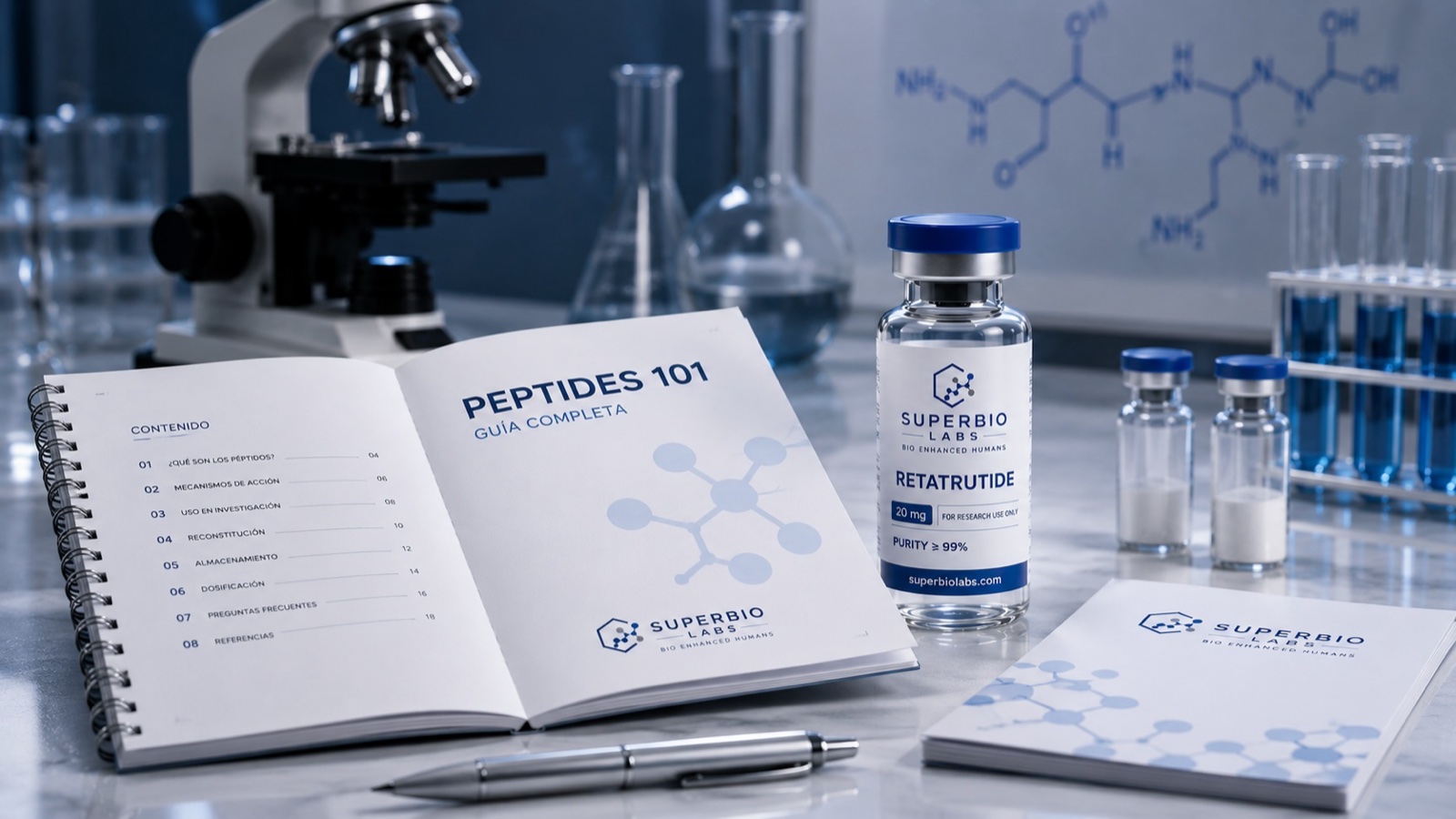
Peptides 101
The full guide.
The full guide.
No marketing, just science.
Fundamentals, application, safety, and storage — organized by category, evidence-based. Filter or browse freely.
Fundamentals, application, safety, and storage — organized by category, evidence-based. Filter or browse freely.
A peptide is a short chain of amino acids joined by peptide bonds. If you think of a protein as a word, a peptide is a syllable: smaller, more specific, easier for the body to read.
Your body produces thousands of peptides naturally every day. Insulin, oxytocin, growth hormone, melatonin — all are peptides. What the high-purity peptides we sell do is imitate or enhance biological signals your body already knows.
That's the limit that defines a peptide. More than 50 is already a protein.
Each peptide has a molecular "key" designed to fit into a specific "lock" in your cells: the receptor. When the key enters the right lock, it triggers a cascade of biochemical reactions with a specific effect.
The peptide is applied under the skin and enters the bloodstream within minutes.
Travels through the blood looking for the specific receptors it was designed for.
Using the extraction syringe 3ml (21G) included in the kit, draw the exact amount from the BAC water vial per protocol (typically 1ml or 2ml).
Insert the same extraction syringe into the peptide vial at an angle, letting the liquid run down the inner wall. Do not shake.
The body metabolizes and eliminates it like any other natural peptide.
This is why peptides are so precise: instead of affecting the whole body (like a generic drug), they target a specific receptor for a specific function.
Not all peptides do the same thing. At SuperBio Labs we organize them into five families based on their primary biological function.
Weight loss · Insulin sensitization
Act on GLP-1, GIP, glucagon receptors and the mitochondrial AMPK pathway. Reduce appetite, improve glycemic control, and accelerate visceral fat loss.
Tirzepatide · Retatrutide · MOTS-c
Tissue repair · Physical recovery
Accelerate healing of soft tissues: tendons, ligaments, muscles, gastric mucosa. Useful for sports injuries or post-operative recovery.
WOLVERINE · BPC-157
Anti-aging · Skin regeneration
Work on the collagen matrix, telomeres, and cellular aging processes. Improve skin, hair, and cellular-level repair processes.
GLOW · KLOW · GHK-Cu · Epithalon
Growth hormone · Sexual function
Stimulate endogenous GH production and modulate key hormonal axes. Improve body composition, recovery, sleep, and sexual vitality.
GROW · PT-141
Brain · Focus · Neuroplasticity
Nootropic peptides that boost BDNF, improve memory and neuroplasticity. For high cognitive demand, post-burnout recovery, or brain-focused clients.
Semax
A blend is a vial containing 2 or more peptides pre-mixed in proportions validated by clinical literature. Instead of injecting each peptide separately, everything comes in a single vial with the correct ratio already calculated.
Why they matter: one injection instead of multiple · proportions validated in research · lower cost than buying each component individually · simplified storage.
Individual vs blend: if you want a specific peptide at custom dosing, go individual. If you want the most studied combination protocol, the blend saves you work.
The vast majority of peptides are applied by subcutaneous injection: under the skin, in the fatty tissue, not in the muscle. It's a quick injection, almost painless when done correctly, and doesn't require medical assistance.
Recommendation: rotate zones to avoid lipohypertrophy (localized fat accumulation).
If you've never injected before, open your protocol in the app and watch the SuperBio OS tutorial videos before your first application. If you have questions, contact our team. We're here to accompany you.
Peptides are delivered as lyophilized powder (dehydrated) for maximum stability during shipping. Before applying them, they must be reconstituted: add bacteriostatic water to dissolve them.
The kit includes one 3ml extraction syringe with a 21G needle (larger, only to draw bacteriostatic water and reconstitute the peptide) and insulin syringes 0.5ml or 1ml with 29G–31G needles (finer, for daily or weekly subcutaneous application). Don't mix them up.
Let the vial reach room temperature 5–10 min.
70% alcohol wipe on both vials.
Draw the exact amount per protocol (typical: 1ml or 2ml).
At an angle, letting the liquid run down the inner wall of the vial. Do not shake.
Roll the vial gently between your hands. Never shake.
Once reconstituted, keep between 2–8°C.
Violent agitation can denature the peptide's protein structure. Move with patience, not in a hurry.
The calculation is simple, but critical. We do it for you in the app, with your protocol and your calculator, but knowing the logic empowers you:
Copper (GHK-Cu) is one of the peptides that stings the most on application, and in some people the soreness lasts more than a day. It's normal and doesn't mean you're doing it wrong. This lowers the sting — these are application-comfort tips, not medical advice:
Reconstituting with more water lowers the concentration and with it the sting (at the cost of a bit more volume). The lever that helps most.
Take the vial out of the fridge 10–15 min before: cold liquid stings more.
Push the liquid in slowly (10–15 seconds), not all at once.
The upper glute tends to hurt less than the abdomen: fewer surface nerve endings and more fat, a better cushion for copper.
Two glasses of water about 30 min before: well-hydrated tissue disperses the liquid better and hurts less. And your part counts — anti-inflammatory habits (omega-3, turmeric, real food) help the area recover.
Change the site between applications. Don't split one dose into two injections to hurt less: you'd end up with two sore spots instead of one.
If the soreness is intense, with growing swelling, heat or fever, that's no longer comfort: consult a health professional.
A peptide's safety depends on three factors: product purity, application quality, and protocol respect. If all three are met, modern peptides have exceptionally good safety profiles.
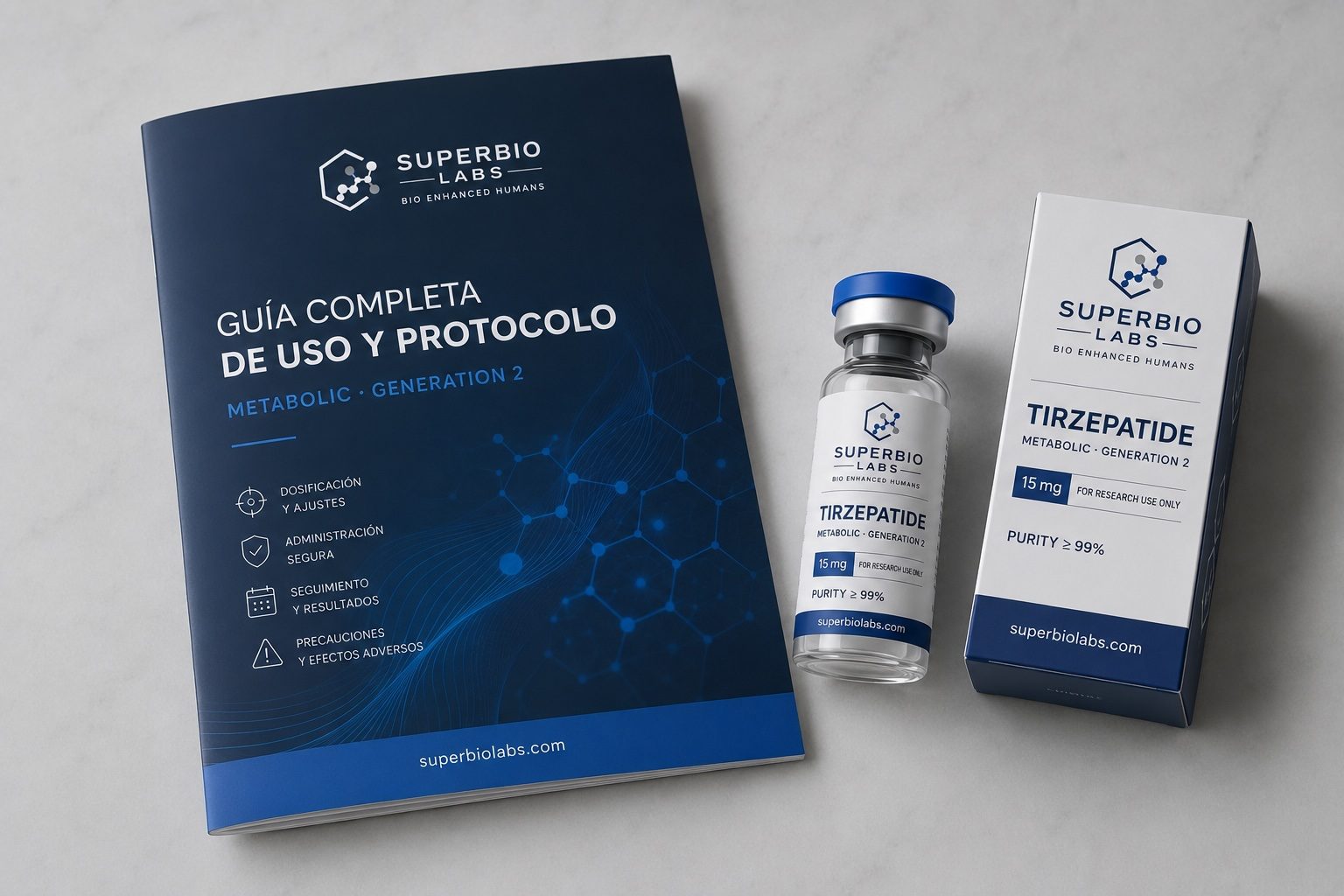
Look for HPLC ≥99% purity with COA (Certificate of Analysis) issued by an independent laboratory. Purity determines whether what you inject is the peptide on the label or impurities and byproducts.
Asepsis (clean hands, alcohol), correct zone (subcutaneous, not muscular), exact dose, new syringe every time. Reconstitution with bacteriostatic water, not tap water.
Don't increase dose "to go faster". Don't skip rest weeks. Don't combine peptides without knowing what you're doing. Patience is part of the result.
The peptides we sell are For Uso bajo criterio profesional. The information on this page is educational, not medical advice. If you have pre-existing medical conditions or take regular medication, consult a healthcare professional before starting any cycle.
Peptides are fragile molecules. Their stability depends on temperature. Stored poorly, they degrade quickly and lose efficacy. Stored well, they last months.
A cycle is the period of time during which you apply a peptide following a protocol. Most cycles last between 4 and 16 weeks, followed by a rest period (post-cycle) for your body to regulate its endogenous mechanisms.
You start with the lowest dose in the protocol. Your body adapts. Possible transient effects.
You move up to therapeutic dose. First visible results begin to show.
Sustained optimal dose. Consolidated results. This is what most people seek.
You gradually lower dose to avoid rebound. Some protocols don't need this.
4–8 weeks off. Your body recovers endogenous function. You evaluate results before the next cycle.
Infinite cycles can generate tolerance (you need larger doses for same effect), suppression of endogenous production, and not knowing which results are "yours" vs "from the peptide". Rest is part of the protocol, not an option.
Knowing the difference is what separates a safe experience from a worrying one. Most "weird" effects in the first weeks are expected and transient.
If you have access to SuperBio OS, you can log your effects daily and see patterns. Our team reviews the logs and contacts you if anything doesn't look normal.
The technical terms you'll read in any protocol or discussion about peptides.
Yes. High-purity peptides are distributed legally in most jurisdictions for research, professional use, and medical consultation. Purchase is legal; application is the buyer's and their doctor's responsibility.
No for peptides. However, we recommend consulting a healthcare professional if you have pre-existing medical conditions or take chronic medication.
Depends on the peptide and goal. Metabolic (Semaglutide, Tirzepatide, Retatrutide): 2–4 weeks. Recovery (BPC-157, TB-500): 1–2 weeks. Longevity (GHK-Cu): 4–8 weeks. Hormonal (CJC + Ipa): 6–12 weeks.
Some yes, some no. BPC-157 + TB-500 works very well for accelerated recovery. CJC-1295 + Ipamorelin are always used together. But combining metabolic with hormonal without knowledge can have interactions. Consult us first.
Minimally. Insulin syringes (29G) are ultrafine. Most describe a "mosquito bite" sensation. Applied well, you barely feel it.
Depends on the peptide. For weekly ones (Semaglutide, Tirzepatide), apply as soon as you remember if less than 48hrs have passed; if more, wait until next scheduled day. For daily ones, skip that dose and continue normally. Never double up.
Depends. For metabolic: part of the weight loss is maintained if you keep healthy habits, but satiety effect disappears. For recovery: repaired tissues stay repaired. For hormonal: endogenous production returns to baseline post-cycle.
Yes. Take them refrigerated (cooler with gel pack) in carry-on. As they're category they're not prescribed drugs, but carry the batch COA in case customs asks.
Alcohol interferes with most goals: increases appetite (anti-metabolic), delays healing (anti-recovery), disrupts REM sleep (anti-hormonal). No serious mixing risk, but results dilute.
No. Peptides don't generate chemical or psychological dependence. Some people get "used to" the satiety effect of GLP-1s, but it's psychological, not pharmacological.
Yes, and in fact it's beneficial. Peptides enhance recovery and body composition when combined with strength training and controlled nutrition. They're not a substitute for effort, they're amplifiers.
It depends on the goal and the duration. You can go for a single vial —Tirzepatide or Retatrutide— or for the ready-made kit with everything the protocol needs: the Metabolic Stack or the Metabolic Duo. No hidden costs: the kit arrives with everything you need to apply it, and each price is on its product page.
Mechanism and safety profile. Steroids are large molecules that affect multiple systems with significant side effects. Peptides are small specific signals that activate the body's natural processes.
Not recommended. Rest is part of the protocol. Consecutive cycles can generate tolerance, suppression of endogenous production, and decreasing results. Better: do one cycle well, rest, do the next well.
Check the batch COA (Certificate of Analysis). At SuperBio Labs, each product includes a QR that links to the specific COA of the vial you buy. That document tells you HPLC purity, molecular mass identity, and endotoxins. Without COA, don't buy from any provider.
That's what SuperBio OS and our team are for. Any question, write us. You don't have to figure it out alone. The sale is the first step. The post-sale service is what changes the game.
A complete guide for every peptide in the catalog: step-by-step reconstitution, U-100 unit table, week-by-week titration, safety flags, and side-effect management. Educational material for the informed patient.
Now that you understand how peptides work, explore the catalog. Every purchase includes the complete kit, personalized protocol and our support throughout the journey.