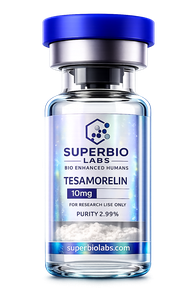
Tesamorelin · 20mg
Research peptideGHRH analog (FDA) · visceral fat
Overview
What has it been researched for?
- Reduces visceral belly fat Main focusStrong evidence
- Improves lipids and blood pressureStrong evidence
- Adds lean massStrong evidence
- Raises GH and IGF-1 physiologicallyStrong evidence
- Reduces liver fatStrong evidence
- Attention, memory and less mental fatigueStrong evidence
Research protocols
The SBL research protocol and what the literature reports. Not medical advice.
SBL research protocol · no established clinical regimen in people
- Dose
- 1 mg
- Frequency
- 5-on / 2-off
- Duration
- 12 weeks
- Route
- Subcutaneous
- Evidence level
- Approved
Tools
Evidence and studies
See studies →Protocols
Research protocols
SBL research protocol · no established clinical regimen in people
Research use, with no established clinical regimen in people.
- Dose
- 1 mg
- Frequency
- 5-on / 2-off
- Timing
- noche
- Duration
- 12 weeks
- Break
- 4 weeks
- Route
- Subcutaneous
- Evidence level
- Approved
Example dose
30-unit U-100 insulin syringe · Starting dose of its protocol, with 2 ml of water in the 20 mg vial.
What it pairs with
- Tirzepatidepairs well
- Tirzepatide With a GLP-1 it targets the visceral belly fat the scale cannot tell apart.
Preparation and dosing
Quick reference
Preparation
- Diluent
- Bacteriostatic water
Evidence
Each effect with its evidence level and, where available, its source.
- Reduces visceral belly fatApprovedSee study · 2007
- Improves lipids and blood pressureHuman studySee study · 2010
- Adds lean massHuman studySee study · 2026
- Raises GH and IGF-1 physiologicallyHuman studySee study · 2011
- Reduces liver fatHuman studySee study · 2019
- Attention, memory and less mental fatigueHuman studySee study · 2012
The science
Mechanisms, studies and references
GHRH analog
Safety
It makes sense if you want
- Trim your waistline
- More muscle, strength & composition
- Lose weight — most potent
It does not make sense if
- Pituitary surgery, tumour or radiation
- Active cancer or oncology treatment in the last 5 years
- Pregnancy or breastfeeding
Talk to your doctor first if this applies (9)
- Severe untreated sleep apnea
- Severe heart disease or recent cardiac event
- Oral or injected corticosteroids (prednisone, dexamethasone)
- Type 2 diabetes / prediabetes
- Immunosuppressants
- Insulin
- Planning a pregnancy in the next 3 months
- Diabetic retinopathy
- Sulfonylureas / metformin
The certificate of analysis (CoA) certifies the identity and purity of the batch. It does not certify safety of use.
Verify your batch →For research use only (RUO). This consult is educational and does not replace your doctor.
Questions
Frequently asked questions
What is it reconstituted with, and how much?
With bacteriostatic water: 2 ml into the 20 mg vial, giving 10 mg/ml.
What is the starting dose of the research protocol?
1 mg, 5-on / 2-off. This is the SBL research protocol, with no established clinical regimen in people.
How long is the cycle, and how long does a vial last?
12 weeks ON / 4 weeks OFF. At the starting dose, the 20 mg vial lasts ~4 sem.
Which route is used in research?
Subcutaneous.
When does it make no sense?
It makes no sense with: Pituitary surgery, tumour or radiation, Active cancer or oncology treatment in the last 5 years, Pregnancy or breastfeeding. Details in the Safety tab.
What is it combined with?
It goes well with Tirzepatide. The reasons are in the Protocols tab.
How do I check my batch?
With the code on the vial, in the verifier. The CoA certifies the identity and purity of the batch, not safety of use.
For research use only (RUO). This consult is educational and does not replace your doctor.