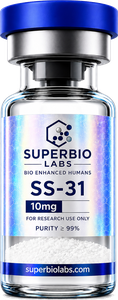
SS-31 · 20mg
Research peptideMitochondrial peptide (cardiolipin) · the first FDA-approved drug that acts on the mitochondria
Overview
What has it been researched for?
- Repairs the mitochondria Main focusStrong evidence
- Protects the heartModerate evidence
- Protects the kidneyModerate evidence
- Muscle and endurance with ageEarly evidence
- Protects the retina and the eyeModerate evidence
Research protocols
The SBL research protocol and what the literature reports. Not medical advice.
SBL research protocol · no established clinical regimen in people
- Dose
- 1 mg
- Frequency
- 5×/semana · misma hora
- Duration
- 8 weeks
- Route
- Subcutaneous
- Evidence level
- Approved
Tools
Evidence and studies
See studies →Protocols
Research protocols
SBL research protocol · no established clinical regimen in people
Research use, with no established clinical regimen in people.
- Dose
- 1 mg
- Frequency
- 5×/semana · misma hora
- Timing
- mañana
- Duration
- 8 weeks
- Break
- 4 weeks
- Route
- Subcutaneous
- Evidence level
- Approved
Example dose
30-unit U-100 insulin syringe · Starting dose of its protocol, with 2 ml of water in the 20 mg vial.
What it pairs with
- NAD+pairs well
Preparation and dosing
Quick reference
Preparation
- Diluent
- Bacteriostatic water
Evidence
Each effect with its evidence level and, where available, its source.
The science
Mechanisms, studies and references
Cardiolipin tetrapeptide
Safety
It makes sense if you want
- Longevity & deep anti-aging
- More energy & active metabolism
- General body recovery
It does not make sense if
- Active cancer or oncology treatment in the last 5 years
- Pregnancy or breastfeeding
- Severe liver impairment
- Severe kidney impairment
The certificate of analysis (CoA) certifies the identity and purity of the batch. It does not certify safety of use.
Verify your batch →For research use only (RUO). This consult is educational and does not replace your doctor.
Questions
Frequently asked questions
What is it reconstituted with, and how much?
With bacteriostatic water: 2 ml into the 20 mg vial, giving 10 mg/ml.
What is the starting dose of the research protocol?
1 mg, 5×/semana · misma hora. This is the SBL research protocol, with no established clinical regimen in people.
How long is the cycle, and how long does a vial last?
8 weeks ON / 4 weeks OFF. At the starting dose, the 20 mg vial lasts ~4 sem.
Which route is used in research?
Subcutaneous.
When does it make no sense?
It makes no sense with: Active cancer or oncology treatment in the last 5 years, Pregnancy or breastfeeding, Severe liver impairment, Severe kidney impairment. Details in the Safety tab.
What is it combined with?
It goes well with NAD+. The reasons are in the Protocols tab.
How do I check my batch?
With the code on the vial, in the verifier. The CoA certifies the identity and purity of the batch, not safety of use.
For research use only (RUO). This consult is educational and does not replace your doctor.