EnergyGuardSS-31
Mitochondrial peptide (cardiolipin) · the first FDA-approved drug that acts on the mitochondria
The ReferenceBenefits, protocols and preparationOpen the reference → For research use only (RUO)
 Ships from Quito · EC 1-3 days · LATAM 4-10
 Arrives damaged? We replace it free
 COA per batch
4 mechanisms. Repairs the power plant.
SS-31 (Elamipretide) is a tetrapeptide that concentrates in the inner mitochondrial membrane and binds cardiolipin. It doesn't stimulate: it stabilizes and repairs.
Binds cardiolipin
Concentrates in the inner mitochondrial membrane and associates with cardiolipin, the phospholipid that organizes the cristae.
More ATP
By stabilizing the cristae it improves the efficiency of the respiratory chain, associated with greater ATP production.
Less oxidative stress
Reduces electron leak and reactive-species generation, protecting the mitochondria from damage.
Repairs, doesn't stimulate
Unlike agonists, it doesn't force signaling: it restores the structure of the cell's "power plant."

Why combine it
Longevity & deep anti-aging
- 1You are here
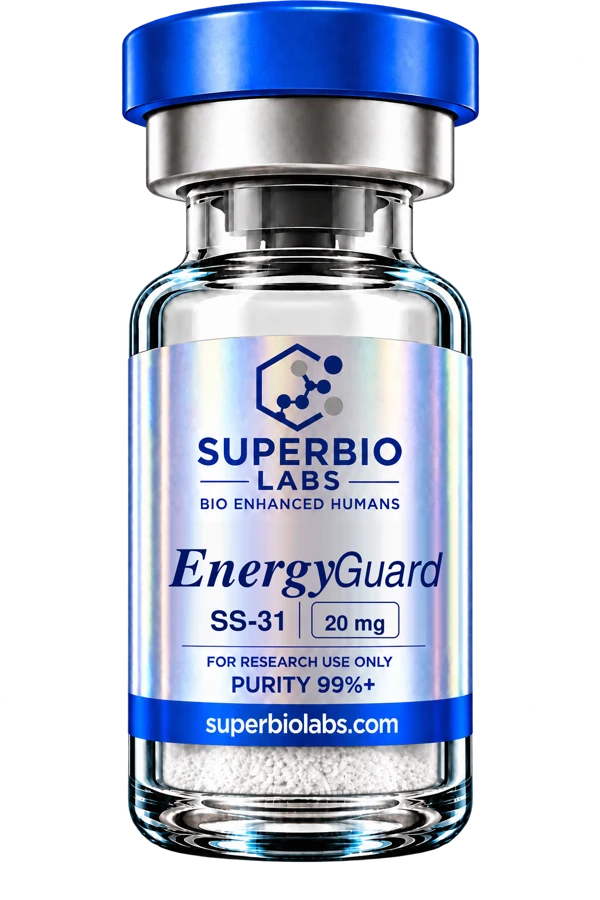 EnergyGuardSS-31Protects the retina and the eye · Repairs the mitochondria
- 2
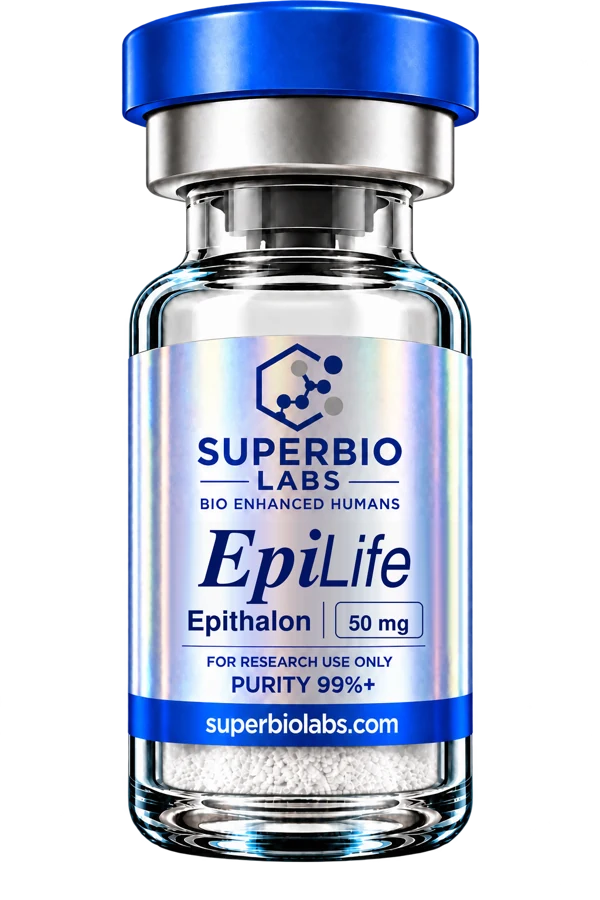 + EpiLifeEpithalon+ Adds: Activates telomerase and protects chromosomes
- 3
 + DermaGlowGlow+ Adds: Antioxidant: less oxidative stress
- 4
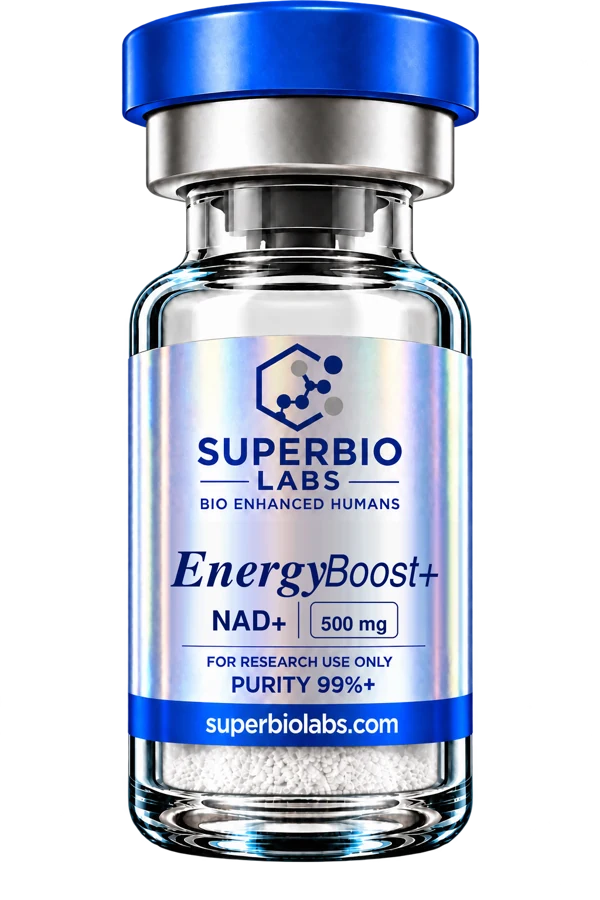 + EnergyBoost+NAD++ Adds: Cellular energy: raises NAD+ and ATP
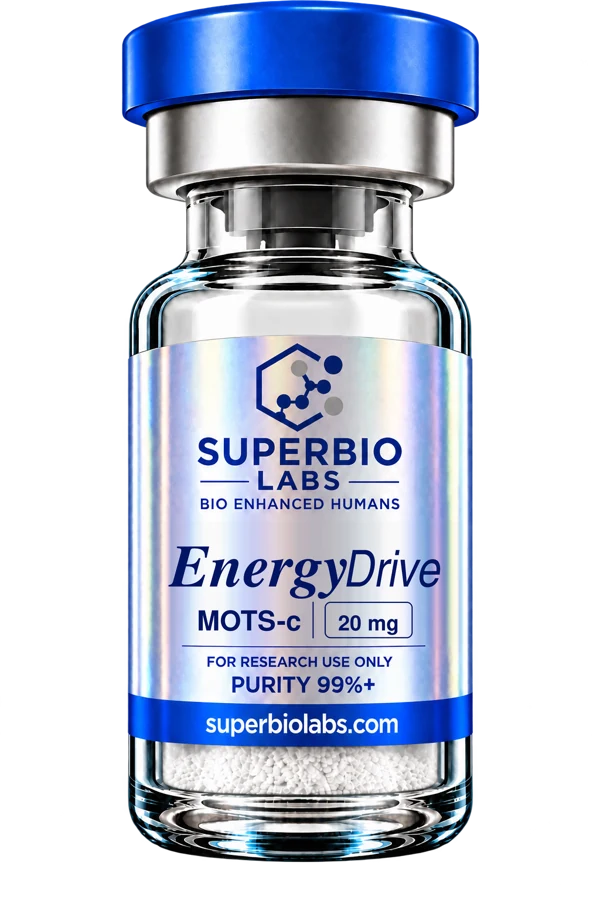 EnergyGuard + EnergyDriveSS-31 + MOTS-cSS-31 first: it repairs the mitochondria. MOTS-c then makes it work.
- EnergyGuard + EpiLifeSS-31 + EpithalonEpiLife (Epithalon) adds: Activates telomerase and protects chromosomes
- EnergyGuard + EnergyBoost+SS-31 + NAD+With NAD+ cellular energy rises on an already repaired mitochondria.
Technical description.
SS-31 (also known as Elamipretide) is a mitochondrial tetrapeptide that concentrates in the inner mitochondrial membrane and binds cardiolipin, the phospholipid that organizes the cristae where energy is produced. By stabilizing that structure, it is associated with more ATP and less oxidative stress: it repairs the cell's "power plant" rather than stimulating it.
SuperBio Labs SS-31 is supplied as lyophilized powder with verified HPLC ≥99% purity. Each lot ships with an independent Certificate of Analysis confirming identity by LC-MS, peptide content (98–102%), and endotoxin levels (<1.0 EU/mg).
It is the mitochondrial peptide with the strongest clinical evidence: in September 2025 the FDA granted it accelerated approval (brand Forzinity) to improve muscle strength in Barth syndrome, the first approved drug that acts directly on the mitochondria. In phase 2 it slowed photoreceptor loss by 43% in dry macular degeneration (without meeting the primary endpoint), and in phase 2a it protected the kidney when blood flow through a renal artery was restored. In adult mitochondrial myopathy (phase 3) it did not improve walking or fatigue, and in heart failure the signals are mixed. For energy and anti-aging in healthy people, its use is a reasonable extrapolation from that data, not yet proven. It has no support for weight, gut, skin, sleep or libido.
Informed professional research use only.
Complete kit · ready to reconstitute.
Each order includes everything needed to use the full vial. No separate purchases required.
How to choose where to buy peptides.
This product meets all five — your batch COA ships with the kit.
Recommended application protocol.
The official protocol included in the kit. If you have a cardiac condition or take medication, consult your physician before starting.
When to use SS-31.
Cellular energy
Declining mitochondrial function · fatigue · documented primary objective.
Longevity
Mitochondrial protection against oxidative damage · biohacker protocol.
Recovery
High training-load phases · recovery support alongside BPC-157.
Performance
Muscular oxidative capacity · secondary objective (not anabolic).
Mito-stack
Structural piece alongside MOTS-c (signal) and NAD+ (cofactor), alternating.
Cardiac function
Phase 2 signals in heart failure, in clinical research · tissue with high mitochondrial demand.
Muscle with age
Fatigue and loss of muscular endurance with age: restored ATP in aged muscle (preclinical).
Eyes and retina
Retinal aging: in phase 2 it slowed photoreceptor loss in dry macular degeneration.
Kidney
Kidney under low-flow stress: in phase 2a it protected the kidney when circulation was restored.
Honest side effects.
Benign in trials. In the research literature the profile is favorable:
Local reaction at the injection site (most common) · better tolerated than NAD+ because it doesn't cause flushing · no significant systemic effects reported in the available studies. Much of the evidence comes from clinical populations (Barth syndrome, dry AMD); use in healthy people for energy/anti-aging is a reasonable extrapolation, not yet proven.
Technical specifications
| Also known as | Elamipretide |
| CAS number | 736992-21-5 |
| Class | Mitochondrial tetrapeptide |
| Molecular target | Cardiolipin (inner mitochondrial membrane) |
| Purity (HPLC) | ≥99% |
| Format | Lyophilized powder |
| Quantity | 20 mg per vial |
| Endotoxins | <1.0 EU/mg |
| Storage | −20 °C, protected from light |
| Use | Use under professional judgment |